

Ape boldly, Risk Smarter & Stay Covered.
On-chain protection for the riskiest minutes of a token launch.
Devnet, unaudited, running on a smoke-test pool. Nothing here is real money yet.
Pay a small premium when you buy. If the token collapses through the rug threshold during the protection window, the evidence is already pinned: the wallet that owns the trade files a claim against it, and has 12–17 min from registering the trade to do it, depending on tier. It pays a fixed portion of your trade back, in full or not at all.
No paperwork. No custody. The program recomputes the collapse itself, and pays only the wallet that owns the trade.
How it Works?
Buy the token on Pump.fun, LetsBonk and Bags.fm — the launchpads ApeCover reads prices from. One rule decides whether it can be covered: its market cap at entry, $10k or less, read by the attestor rather than declared by you.
Choose a tier and pay its premium — a fixed 3%–10% of your trade size, the same rate for every token and every market. Register the swap straight away: your window opens when you register, not when you bought.
Cover runs for the first 10–15 min after you register, depending on your tier — the window a launch is most likely to collapse in. A watcher pins the price evidence as it goes.
If the token falls 90% from your attested entry inside that window, the wallet that owns the trade files a claim against that evidence — within 12–17 min of registration, or the cover lapses.
Protection, Built for DeFi
Designed specifically for the first 10–15 min after you register, depending on the tier.
A watcher pins the price evidence as your window runs; the wallet that owns the trade files against it, posting a bond that is refunded if the claim stands; and the program recomputes the collapse on chain before it pays. A rejected claim forfeits the bond.
The premium is 3%–10% of your trade size, set by tier and identical for every token, every venue and every market condition. There is no per-token rating and no surcharge on the launches that look worst.
One property of the token is screened, and the program checks it on chain: its market cap at entry, which must be $10k or less. Above it, registration is refused rather than sold now and denied later.
Your assets remain under your control.
Choose Your Protection
| Tier | Premium | Payout | Full payout up to | Window | Entry cap |
|---|---|---|---|---|---|
| Basic | 3% | 25% | 4 SOL | 10 min | $10k |
| Standard | 5% | 50% | 2 SOL | 10 min | $10k |
| Degen Max | 10% | 100% | 1 SOL | 15 min | $10k |
Pays when the token falls 90% from your attested entry inside the window. Cover is sold per trade or in packs of 10, 20, 50, 100. Every payout is also capped at 1 SOL per trade, whatever the tier — which is what the column above is. Past that size the premium keeps scaling with your trade and the payout does not: at the pool’s 10 SOL maximum, a Degen Max trade costs 1 SOL and can return at most 1 SOL.
- Per trade
- 1 SOL — the most the pool will pay on any one trade, at every tier.
- Per wallet
- 5 SOL of cover held open at once, across every trade you have running. A trade’s share comes back when a claim on it settles, or when someone sends its expiry — which the program refuses until the filing deadline has passed, 12–17 min from when you registered. Until that transaction lands the room stays taken.
- Per token
- No limit of its own — nothing anywhere adds up cover by the token you bought. That is not unlimited cover: everyone insuring the same token draws on the one pool capacity below, first come, first served.
- Per pool
- 80% of the capital backing the pool can sit behind open cover at once. On a pool this size that is the limit that binds first, and a trade it cannot back is refused when you register it rather than when you buy.
- Trade size
- 0.01–10 SOL per trade. A size outside that range is refused at purchase rather than sold and denied later.
These are the live pool’s parameters rather than guarantees — an admin can retune any of them without a program upgrade. The buy panel reads the current figures from chain and prices your size against them before you sign. Every rule, including what is not covered.

Security & Audit
Built With Security in Mind
ApeCover is rigorously tested and designed with multiple layers of protection across smart contracts, pricing and reserves. 1–2 independent third-party audits will be conducted before launch.
- To be announced
- To be announced
- To be announced
- To be announced
Partners
Protection, Built Into Your Platform
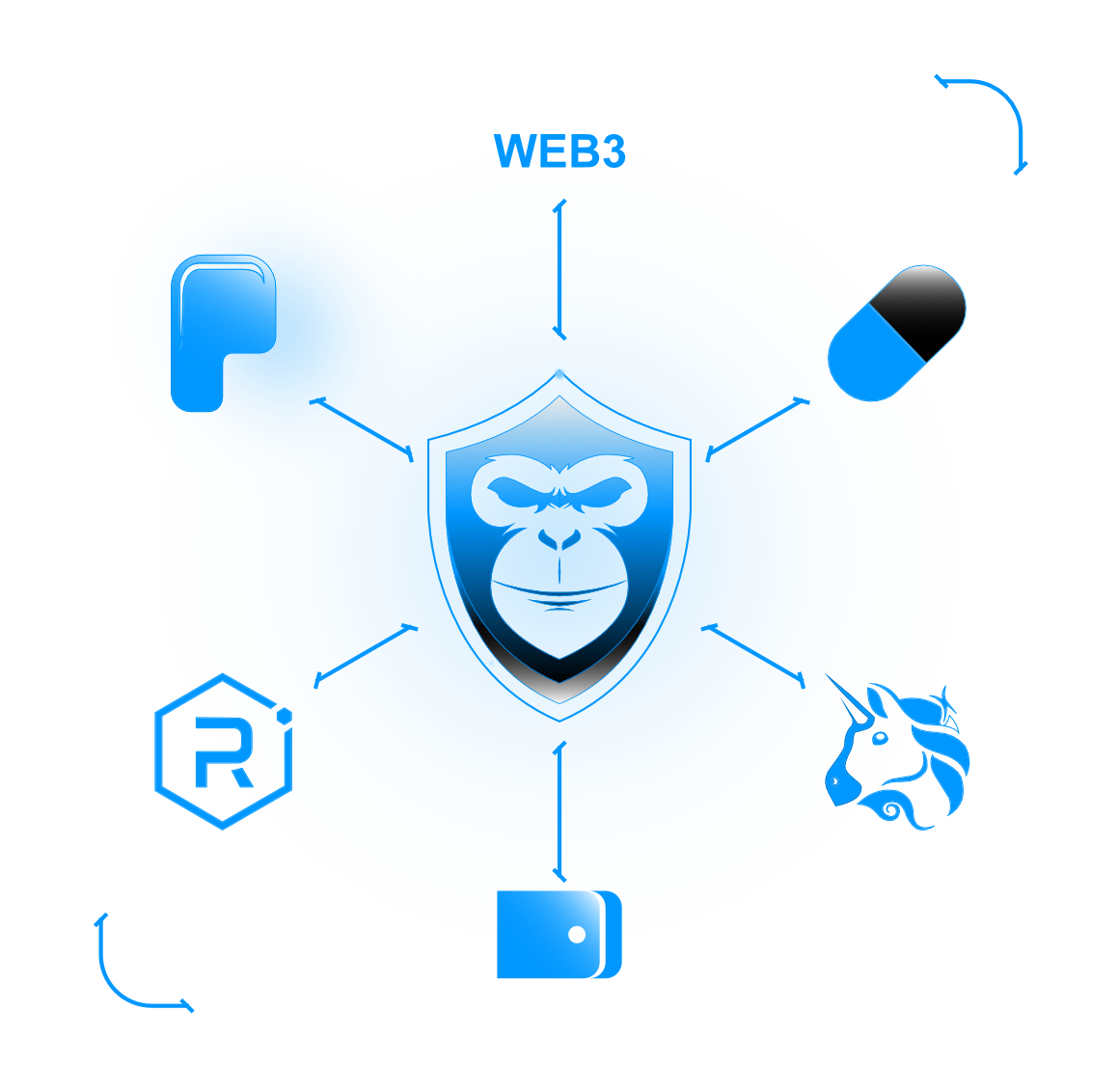
Integrate ApeCover into your trading bot, launchpad, DEX, wallet or Web3 application and offer users on-chain protection without building the infrastructure yourself. Bots that carry the insurance toggle earn a share of every premium they write.
ApeCover Token
Powering the ApeCover Ecosystem
The ApeCover Token will support ecosystem growth through rewards and incentives, aligning users, partners and the broader ApeCover community.
Token details and launch information will be announced officially.

Protection Wherever You Trade
ApeCover is designed as a protection layer for existing trading platforms and launch environments.
Platforms can integrate ApeCover without building their own underwriting and protection infrastructure. The protocol already includes a universal router, venue adapters and partner SDK.
FAQ
What is ApeCover?
ApeCover is an on-chain protection protocol designed to reduce downside risk during the highest-risk period of a token launch.
How does ApeCover work?
You pay a premium when entering an eligible trade. If the token collapses through the rug threshold during the protection window, the wallet that owns the trade files a claim against the recorded evidence — it has 12–17 min from registering the trade, depending on tier, and after that the program refuses the claim, so cover nobody filed on cannot be paid. The pool's keeper verifies it on chain, and the program recomputes the collapse itself and pays the reserved amount, in full, to the owning wallet.
How long does protection last?
It depends on the tier: Basic runs for 10 min, Standard runs for 10 min, Degen Max runs for 15 min. A short claim window follows, and the buy page states the exact figures read from the chain.
Does ApeCover protect every token?
No. One rule decides which tokens: the attested market cap at entry must be $10k or less, and ApeCover's attestor has to be able to price the token and read your swap — one it cannot price is refused rather than covered. Nothing else about the token is examined: no venue requirement, and no honeypot, token-contract or liquidity screening. What is measured is the price.
Can I protect any size trade?
No. A trade must be 0.01–10 SOL; no single trade is paid more than 1 SOL, whatever its tier; and one wallet can hold 5 SOL of payout reserved at once. Beyond those the pool itself binds — it will not put more than 80% of the capital behind it into open cover, so a trade it cannot back is refused when you register rather than when you buy. There is no per-token limit; nothing adds cover up by the token you bought. Those caps are there so the pool does not write cover it could not pay, and they bound what a trader who rugs their own token could collect — they do not stop one from trying. The buy panel reads every figure from the chain before you sign.
Is ApeCover custodial?
No. ApeCover is designed to be non-custodial.
Which chains are supported?
Solana. Cover attaches to swaps on Solana launch platforms, and the protocol settles on Solana.
Is ApeCover risk-free?
No. ApeCover manages risk with an entry market-cap rule, reserves, utilization limits and position caps, and prices at one rate per tier. It does not eliminate market or protocol risk, and a claim nobody files before the deadline is not paid.
Don't eliminate the risk. Make the risk measurable.